
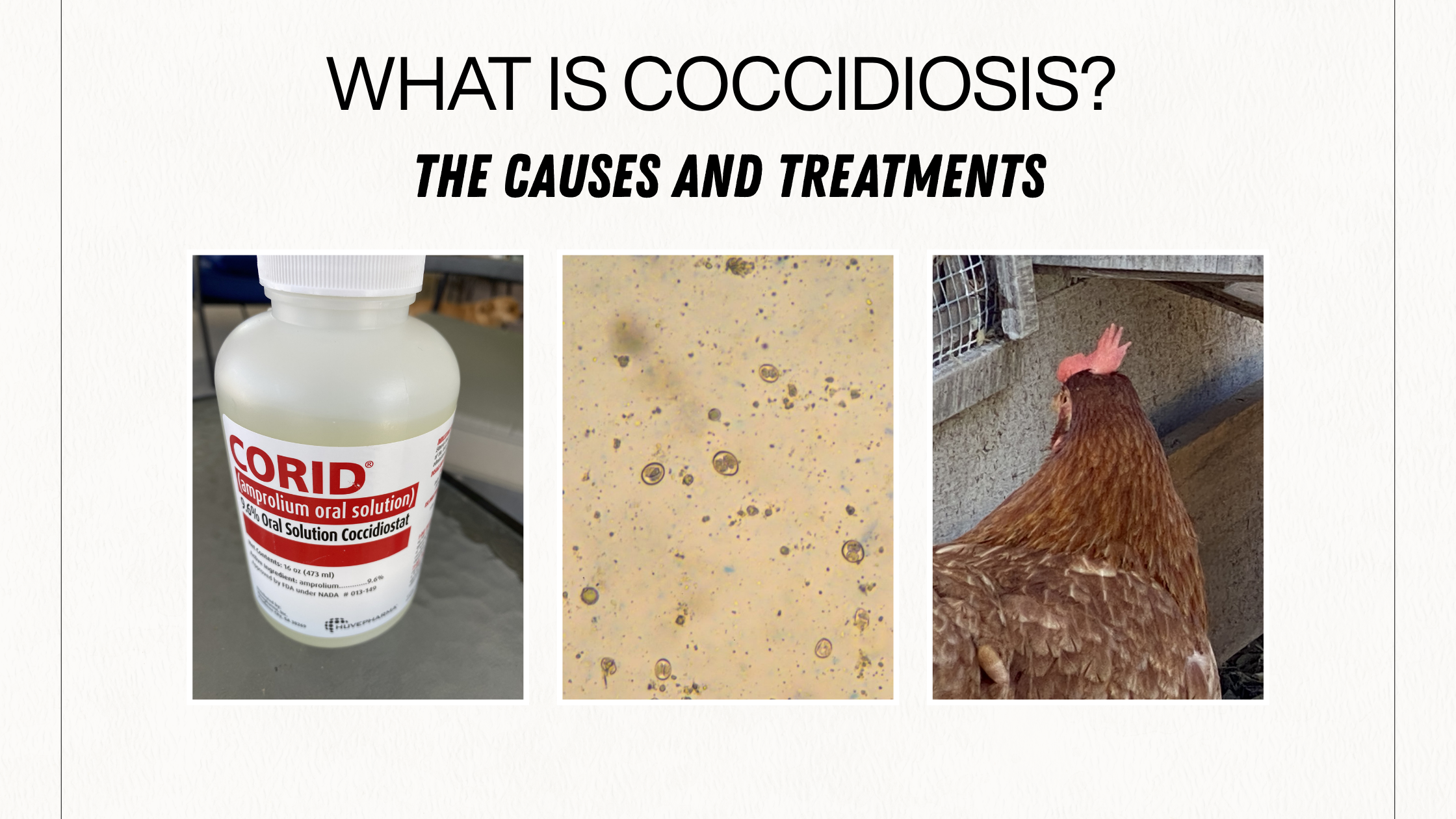


It started on a Tuesday morning. Vera, one of our most spirited hens, was hanging back from the feeder. Her comb had gone from a healthy red to an unsettling pale pink. Her droppings were watery and yellow — a sharp departure from normal. She was hunched, quiet, and clearly miserable. Any experienced chicken keeper knows that look: something is wrong.

We immediately started researching, and everything pointed to the same answer: coccidiosis. What followed was a week of careful treatment, anxious monitoring, and a steep learning curve. Vera pulled through — and we want to share everything we learned so you can act fast if it ever happens to your flock.
What Is Coccidiosis?

Coccidiosis is an intestinal disease caused by single-celled parasites called coccidia — specifically the genus Eimeria. These microscopic organisms live in the lining of a chicken’s intestinal tract, where they reproduce rapidly and destroy gut tissue. The disease is one of the most common causes of illness and death in young and adult chickens worldwide.
Coccidia are everywhere — in soil, in water, in droppings. In small amounts, exposure actually helps birds build natural immunity. The problem arises when the parasite load becomes overwhelming, either due to stress, wet conditions, a weakened immune system, or a sudden influx from an outside source.
Recognizing the Symptoms
Speed matters enormously with coccidiosis. By the time visible symptoms appear, a bird’s intestinal lining is already significantly damaged. Here’s what to watch for:
- Pale or shrunken combOne of the earliest visible signs — indicates anemia and poor circulation from blood loss in the gut
- Yellow or bloody diarrheaWatery, yellow, or rust-colored droppings with mucus are classic indicators of intestinal damage
- Lethargy & hunchingAffected birds stand apart from the flock, eyes half-closed, feathers fluffed against the body
- Reduced appetiteBirds stop eating and drinking — which accelerates deterioration and dehydration
- Rapid weight lossVisible thinning, especially around the keel bone, as the body can no longer absorb nutrients
- Blood in droppingsBright red blood signals severe mucosal damage — requires immediate treatment
Do not wait for all symptoms to appear.If even one or two of these signs are present, treat the entire flock immediately. Coccidiosis spreads through droppings, and birds who appear healthy may already be carrying a significant parasite load.
What Likely Caused It: Wild Birds
One of the most probable causes in our situation was wild birds. We’ve always had sparrows, starlings, and other small birds helping themselves to our chickens’ outdoor feeder. They eat, they scratch around — and they defecate in the same areas where our flock spends its days pecking and foraging.
Wild birds carry their own strains of coccidia, which our flock hadn’t built immunity to. A single infected wild bird can deposit oocysts (the egg-like form of the parasite) into the soil, where they survive for months and can be ingested by curious chickens in large quantities.
- Wet or muddy conditionsDamp litter and soil accelerate oocyst development and survival — poor drainage is a major risk factor.
- OvercrowdingToo many birds in too little space dramatically increases exposure to contaminated droppings.
- New birds introduced to the flockIncoming birds may carry strains your existing flock has no immunity to, triggering an outbreak.
- Stress eventsMoving coops, extreme weather, or predator scares can suppress immune function and allow dormant infections to flare.
- Contaminated feeders or waterersDroppings falling into shared food and water sources are a primary transmission route within a flock.
- Young birds (under 6 months)Chicks and pullets have not yet developed immunity and are disproportionately vulnerable to severe infection.
Our Treatment: Corid (Amprolium)
After confirming our suspicion, we drove straight to Tractor Supply and picked up Corid 9.6% Oral Solution — the liquid concentrate form of amprolium, the gold standard treatment for coccidiosis in poultry. Amprolium works by mimicking thiamine (Vitamin B1), which coccidia need to reproduce. The parasites absorb it instead of real thiamine and starve out.
Crucially, we treated the entire flock, not just Vera. Even birds showing no symptoms can harbor the parasite and would reinfect recovering birds if left untreated.
The Conversion Math
Corid 9.6% Oral Solution comes in a concentrated liquid. The label calls for different dosing depending on whether you’re doing a high-dose treatment (active outbreak) or a low-dose prevention. We used the high-dose protocol for an active outbreak:

Corid 9.6% Oral Solution — High Dose Treatment (Active Outbreak)
Label rate: 16 fl oz per 100 gallons of water (high-dose, 5-day minimum)
Scaled down: 16 fl oz ÷ 100 = 0.16 fl oz per gallon
Convert to teaspoons: 0.16 fl oz × 6 tsp/fl oz = ~1 tsp per gallon (rounded for ease)
Our flock water: ~1.5 gallons/day → 1.5 tsp of Corid per day’s water
Treatment duration: 5–7 days (we ran a full 7-day course)
Always mix fresh medicated water daily. Remove all other water sources during treatment.
We mixed a fresh batch each morning, removed all other water sources so birds were drinking only the medicated water, and kept a close eye on consumption. Chickens can sometimes avoid medicated water — if uptake seems low, slightly warming it or offering it as the only option usually resolves this.
Vera’s Recovery: Day by Day
The thing that surprised us most was how quickly Vera responded. Within the first 24 hours of medicated water, she was visibly brighter. By day two, she was back at the feeder.
Day 0 — Symptoms noticed
Pale comb, yellow watery droppings, severe lethargy. Vera barely moved from one corner of the run. Began treatment same day.
Day 1 — First signs of improvement
Vera drinking medicated water. Standing more upright by evening. Eyes clearer. Comb beginning to show color.
Day 2 — Eating again
Back at the feeder. Droppings still loose but no longer yellow. Rest of flock showing no new symptoms.
Days 3–5 — Steady improvement
Vera reintegrating with flock normally. Comb red again. Energy returning. Continued full treatment course.
Days 6–7 — Full treatment complete
Vera fully recovered. Droppings normal. Full 7-day course completed to reduce risk of relapse.
Vera is fully recovered. After seven days of Corid treatment, she is back to her bossy, curious self — first to the feeder, loudest in the yard. A full treatment course is essential even when birds look recovered, to eliminate remaining oocysts.
Other Treatment Options
Corid (amprolium) is the most widely available and commonly recommended treatment, but it’s worth knowing about other options:
- Corid (Amprolium) — Our choiceAvailable at Tractor Supply in liquid concentrate (9.6%) and soluble powder (20%) forms. No withdrawal period for eggs or meat. Highly effective, widely trusted, and easy to dose. The go-to treatment for most backyard flock keepers.
- Sulfonamide antibiotics (Sulmet, Di-Methox)Prescription or OTC sulfa drugs that kill coccidia. Effective, but have egg withdrawal periods and are harder on kidneys. Best used when amprolium is unavailable or when a vet recommends them.
- Toltrazuril (Baycox)A single-dose treatment widely used in Europe and increasingly available online in the US. Highly effective with a broad spectrum against multiple Eimeria species. Requires only one or two treatments rather than a week-long course.
- Ponazuril (Marquis)Originally a horse dewormer, used off-label in poultry by some avian vets. Very effective but typically requires veterinary guidance and is more expensive.
- Supportive care alongside treatmentElectrolytes and vitamins (particularly B vitamins, since amprolium temporarily blocks thiamine absorption) added to a separate water source, or offered after the treatment course, help birds recover strength. Probiotics after the treatment period can help restore gut flora.
Avoid giving vitamins containing B1 (thiamine) during Corid treatment.Amprolium works by blocking thiamine uptake in coccidia — supplementing with thiamine during treatment can reduce its effectiveness. Wait until after the full course to resume vitamin supplements.
Prevention Going Forward
We’ve made some changes since Vera’s illness. The wild bird feeder is now positioned well away from the chicken run, and we’ve added a roof extension to discourage small birds from perching over the area where our flock forages. We’re also being more vigilant about keeping litter dry and changing waterers daily.
Coccidiosis will likely always be part of keeping backyard chickens — the parasite is simply too ubiquitous to eliminate entirely. But fast recognition, prompt treatment, and reducing environmental risk factors make an enormous difference. Vera is proof of that.
Always consult your veterinarian if you are unsure about a diagnosis or treatment protocol, particularly for chicks or severely ill birds. Dosing information is based on the Corid 9.6% Oral Solution label at time of use — always read and follow current label directions.
Leave a Reply