


Affiliate Disclosure: Some links in this post are affiliate links, which means farmersjane.com may earn revenue if you purchase through them—at no extra cost to you. Thanks for supporting our farm and content!
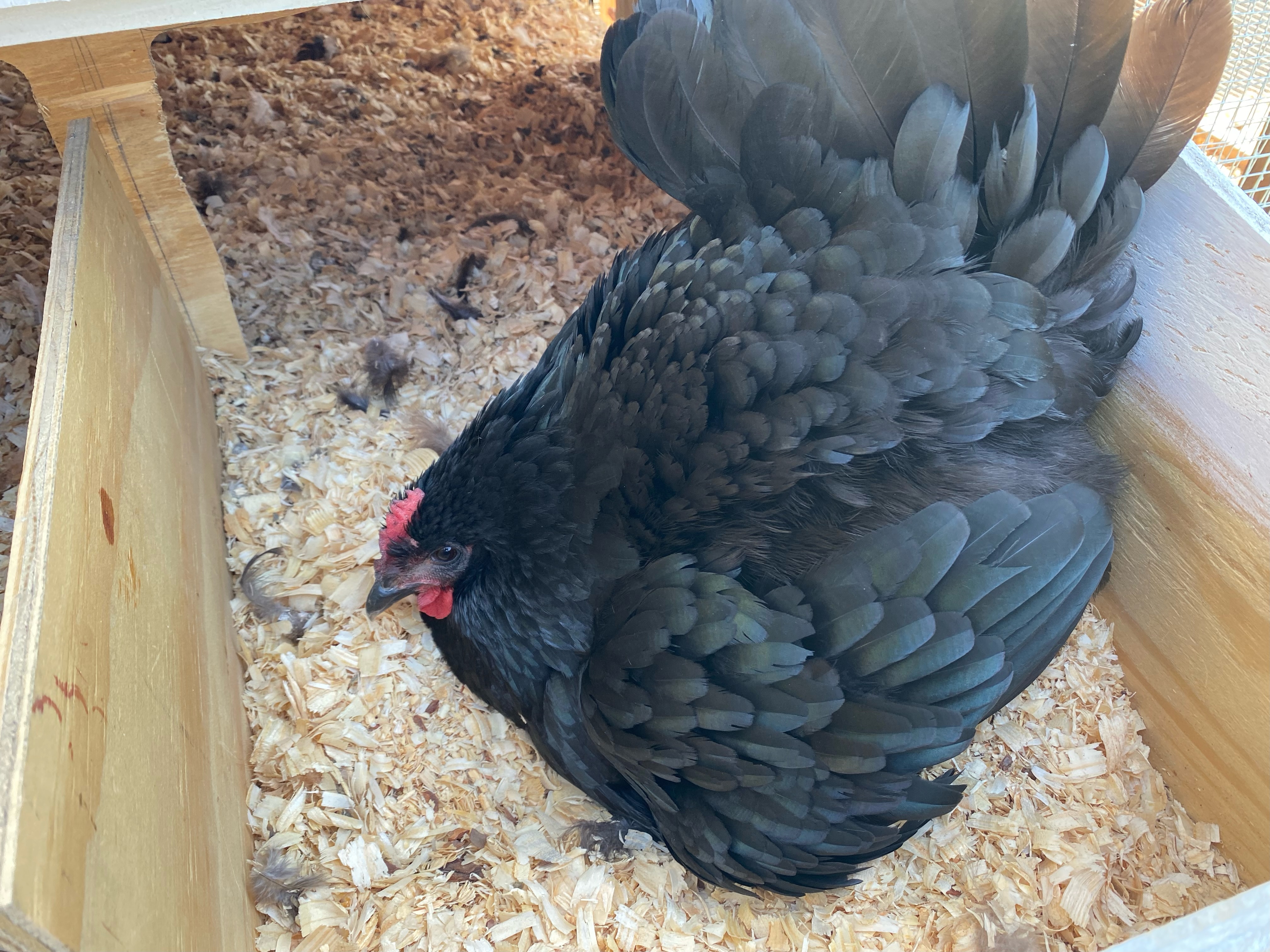
We had eggs. Glorious, golden-yolked, fresh-from-the-backyard eggs. And then one day… fewer eggs. A couple of our girls stopped laying almost overnight and started spending all their time guarding the nesting boxes or sitting on whatever eggs the others had laid. Gamora — our big, loyal Jersey Giant — had become particularly intense about it, planting herself in the box and refusing to budge. She’d even lost all the feathers on her chest, which, if you’ve never seen that before, is equal parts fascinating and alarming.
Being a relatively new chicken family, this was our first real drop in production and honestly, I wasn’t sure what to make of it. Was this a serious problem? A normal cycle that would sort itself out? I didn’t want to stress the hens out by poking around at them unnecessarily, and I definitely didn’t want to call a vet over something that might just be… Tuesday for a backyard flock. So I did what any modern chicken mom does — I researched obsessively.
Turns out there are several things that can cause a hen to slow or stop laying, and Gamora was showing textbook signs of at least one of them. Here’s what I learned.
A drop in egg production is one of the most common — and most frustrating — experiences in backyard chicken keeping. The good news is, there’s almost always a reason, and most of them are fixable.
1. Shorter Days (Seasonal Lighting)
Chickens need roughly 14–16 hours of light per day to lay consistently. As daylight decreases in fall and winter, many hens will naturally slow down or stop laying entirely. This is completely normal.
The fix: A simple coop light on a timer can make a huge difference. We use a low-wattage LED bulb set to come on in the early morning hours to extend the “day.” We use this set up to make it an automatic, hands free solution. This is our timer based plug that is set to turn on and off at a specific time and these are our lights that make our flock party later into the day. They also work with Alexa which is pretty great! Many keepers add light in the morning rather than evening so hens still get a natural wind-down at dusk.
2. Molting
Once a year (usually in fall), chickens shed their feathers and regrow them. It looks alarming, it sounds alarming, and egg production typically stops completely during this time. Totally normal. Taco looked absolutely ridiculous during her first molt and we were convinced something was very wrong. Nope — just fashion choices.
Support your flock during molt with a high-protein feed or supplement. When we shake the bag of worms, the girls come running and its so fun to see!
3. Stress
Chickens are sensitive creatures. A predator scare, a new flock member (hello, integration drama), a change in routine, or even a heatwave can throw egg production off for days or weeks. Think back — did anything change around the time the eggs stopped?
4. Nutritional Deficiencies
Calcium is the big one. Without adequate calcium, hens can’t form proper eggshells — and their bodies will eventually pump the brakes on production. Make sure your flock always has access to oyster shell. We keep it in a separate feeder so each hen can take what she needs.
5. Age
Hens are egg-laying rockstars for their first 2–3 years. After that, production naturally declines. It doesn’t mean your older girls aren’t worth their scratch — ours are beloved pets regardless of their productivity — but it’s good to set realistic expectations.
6. Hidden Nests
Before you panic, check your yard carefully. Sometimes hens decide the nesting boxes are overrated and start laying in a secret spot in the bushes. We’ve found eggs in some truly creative locations and sometimes they are just out in the yard. A decoy egg in the nesting box can help encourage them back to the right spot. Currently, this is what Gamora is sitting on. We snatch the real eggs as fast as they lay them.
7. She’s Gone Broody
One day your hen is a reliable layer, the next she’s glued to the nesting box, fluffed up like a little football, and absolutely furious that you’ve come anywhere near her. Congratulations — you’ve got a broody hen.
When a hen goes broody, her hormones are telling her to sit on eggs and hatch them. Her body pumps the brakes on laying entirely, and she’ll dedicate herself to sitting — sometimes for weeks — whether there are eggs under her or not. Vera gave us our first taste of this and the puffed-up growl she greeted us with was genuinely startling for a bird her size.
A few signs your hen has gone broody:
- Refusing to leave the nesting box (she may only get up once a day to eat, drink, and do one impressively large broody poop)
- Fluffing up, growling, or pecking when you reach near her
- Pulling out her own chest feathers to line the nest
- Sitting flat and spread out over any eggs — or no eggs at all
If you don’t have a rooster (or don’t want chicks), you’ll want to break the broodiness so she gets back to laying. Try these steps:
- Remove her from the nesting box consistently throughout the day
- Block access to the nesting boxes temporarily
- Place her in a “broody buster” — a wire-bottomed cage elevated off the ground with food and water but no nesting material — airflow under her helps cool the hormones driving the behavior
Breaking a broody hen can take anywhere from 3 days to a week. Be patient and consistent. And don’t feel guilty — she’ll forgive you eventually. Probably.
It was clear to us that Gamora, was falling into this exact definition and we needed to take steps to get her feeling more like the goofy bird we know and love, and of course we wanted her to get back to laying those yummy little protein balls we look forward to daily!

We already have a wired cage for our dog so we are opting to try that solution. It will be hard but its important to keep the flock producing and not causing drama by being protective of eggs.
The Bottom Line
Most laying slumps are temporary. Take a look at your setup, your feed, the season, and your flock’s stress levels — and you’ll likely find the culprit. And in the meantime? The grocery store exists. We won’t tell anyone.
Leave a Reply